Step 1: Choose your level
What is your current level?
Do you have a deadline in mind? *
* For example, if you plan to travel soon or are studying for an exam, select "yes".
Step 2: Set a Language Learning Goal
Choose one goal type:
The CEFR levels below are estimates based on the typical learner’s vocabulary size and do not take grammar, speaking, or writing skills into account (yet!). Vocabulary and CEFR levels are related: the larger your vocabulary, the higher your proficiency in a language.
Check the table at the bottom of this page to see how CEFR levels and the number of mastered words can relate to each other.
Your study plan:
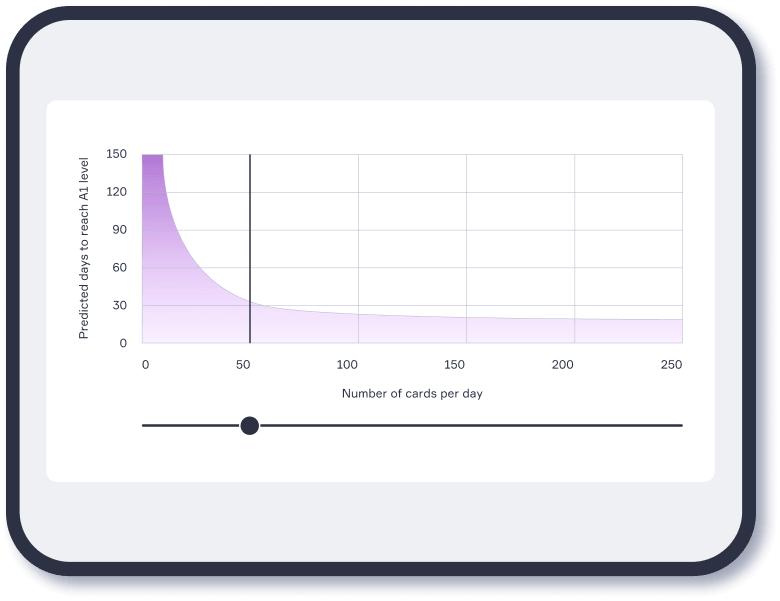
Number of cards per day:
How long does it take to learn a new language?
Learning a new language can look different for every learner; it requires time, dedication, resources, and commitment. Not everyone has the same needs or interests, so the true answer to this question is: it depends.
There’s an easy way to find out how long it can take you to fully learn a new language based on your personal goals:
Setting Realistic Language Learning Goals
Setting realistic language goals is the best way to maintain long-term motivation. Use the results from this personalized study plan to kickstart your language learning journey today. You can return to this page at any time to make adjustments, set a new goal, or simply plan your next steps toward fluency.
CEFR Levels and Mastered Words
| Level | Active vocabulary size* |
|---|---|
| Total Beginner | 0 |
| A1 | 300 |
| A2 | 600 |
| B1 | 1,200 |
| B2 | 2,500 |
| C1 | 5,000 |
| C2 | 10,000 |
| Native Speaker | 20,000 |
*Active vocabulary includes words you can actively recall and produce (say or write) on your own, while passive vocabulary includes words you recognize when you see or hear them.
The number of unique words in Lingvist’s Custom Decks varies based on language pair, but we are continually working to expand our courses and add new content.